Christian Faith Cross
A Quiet, Confident Statement — Not a Loud Symbol
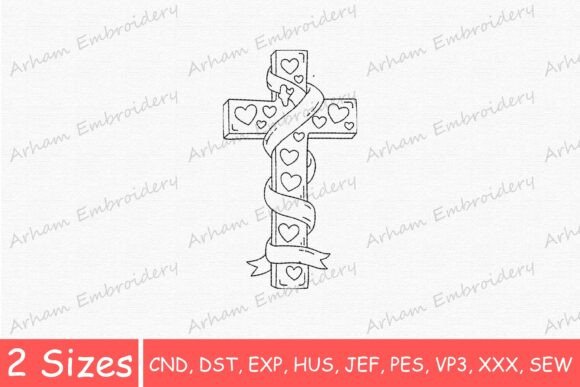
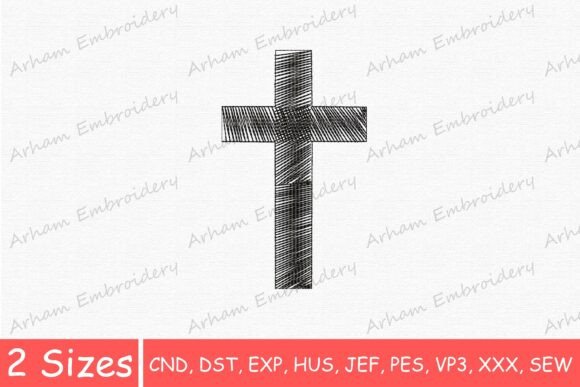
When I opened Christian Faith Cross for the first time, what struck me wasn’t complexity—it was calm intention. This isn’t a flashy, ornate cross with scrolling vines or glittering halos. It’s clean-lined, centered, and balanced: a vertical beam slightly elongated, arms modest in width, with subtle tapering at the ends. The negative space breathes. There’s no heavy fill stitch cluttering the silhouette—just thoughtful satin stitch definition along the edges and gentle fill where needed. It feels reverent without being stiff, traditional without feeling dated. That matters deeply when you’re stitching for real people: a new parent choosing nursery decor, a boutique owner curating holiday gifts, or an Etsy seller building a cohesive faith-based collection.
Where It Lives Best — Real Projects, Real Fabric
I tested Christian Faith Cross on three very different items: a medium-weight organic cotton tote bag, a soft cotton-blend baby onesie, and a structured twill apron for a local kitchen shop. On the tote? Perfect. Crisp, legible, and grounded—no distortion, no thread nesting. On the onesie? It held up beautifully with lightweight tear-away stabilizer and reduced top tension; the scale felt tender and appropriate, not overwhelming. On the apron? The satin-stitched outline popped against the textured twill, and the open center kept it from looking heavy or dense.
This design shines in projects where clarity and quiet dignity matter more than visual noise: embroidered pillow covers for a church welcome center, minimalist tea towels for a faith-themed small shop, custom sweatshirt embroidery for youth group retreats, or delicate patches sewn onto denim jackets for teens who want meaning—not merch. It also translates well into printable mockups for Etsy listings: clean lines render sharply in both light and dark backgrounds, and it reads clearly even at thumbnail size.
Where to Pause — Texture, Scale, and Surface Matter
That same elegance becomes a consideration on trickier substrates. On highly textured fabrics like bouclé or thick terry cloth, the fine satin stitch definition can blur—so test with extra stabilizer and possibly a slightly larger needle (size 75/11 or 80/12). On stretchy knits (think lightweight t-shirts or baby bodysuits), skip the dense fill areas entirely if they exist in your version—opt instead for a simplified outline or running-stitch variation. And on curved surfaces like caps? Stick to smaller hoop sizes (4” or under) and avoid placing it near the crown seam unless you’ve confirmed the digitizing allows for smooth wraparound.
Also worth noting: if your version includes tiny script elements (like “Faith” or “Hope” beneath the cross), inspect those letters closely in your embroidery software. Small serif details often collapse at low stitch counts—especially on thin fabric or with low-contrast thread. I’d recommend simplifying or omitting them for baby embroidery or frequent-wash items like kitchen towels.
What It Adds to Your Finished Product — Beyond the Stitch
Christian Faith Cross elevates perception—not just of the item, but of the maker. When stitched cleanly, it signals care, restraint, and understanding of context. Customers notice that. A personalized gift with this cross doesn’t feel mass-produced; it feels chosen. For craft businesses, it supports brand consistency across product lines—whether you’re selling digital embroidery files or handmade embroidered blankets. It builds trust because it avoids cliché. It doesn’t shout doctrine—it invites reflection. That nuance is rare, and valuable.
It also performs well commercially. As a digital embroidery file, it’s versatile enough for multiple end uses—apparel, home goods, accessories—without needing heavy redesign. That makes it strong inventory for an Etsy seller offering both files and finished products. Just remember: confirm licensing terms with Religion Amp before bundling it into kits or reselling as part of a branded collection.
Designer Notes You’ll Actually Use
- Always test first—on scrap fabric matching your final project’s weight and stretch. Even simple designs shift on unstable bases.
- Check thread color contrast carefully. This design relies on shape, not saturation—so pale gray thread on oatmeal linen may disappear. Try charcoal or navy for depth without harshness.
- Review stitch density in your editing software. If fill areas feel overly dense for your fabric, reduce density by 10–15%—especially for baby items or lightweight garments.
- Confirm hoop size compatibility. If you’re using it for caps or small accessories, verify the design fits comfortably within your smallest hoop with margin for basting.
- Inspect corners and curves in the satin stitch path. Look for potential puckering points—smooth transitions mean cleaner results on curved seams or bias-cut edges.
- Test black-and-white mockups before finalizing listings. Does it retain character in grayscale? With Christian Faith Cross, it does—and that’s a sign of smart digitizing.
- Match stabilizer to purpose: cutaway for knits, tear-away for stable wovens, fusible for lightweight linens. Don’t assume one fits all.
- Verify commercial use rights before selling finished embroidered items or including it in digital product bundles. Licensing varies—even within the same brand like Religion Amp.
Final Thought: A Design That Serves the Maker and the Meaning
Christian Faith Cross isn’t about filling space—it’s about honoring it. As a machine embroidery design, it gives you room to execute thoughtfully, not frantically. As a handmade product element, it adds sincerity without overstatement. As a digital embroidery file, it’s adaptable, respectful of fabric behavior, and easy to integrate into broader collections. Whether you’re embroidering a baptismal blanket, prepping holiday merchandise for your small shop, or building a portfolio of meaningful design assets, this cross earns its place—not through ornament, but through integrity. That’s the kind of detail experienced designers recognize instantly, and customers feel without knowing why.